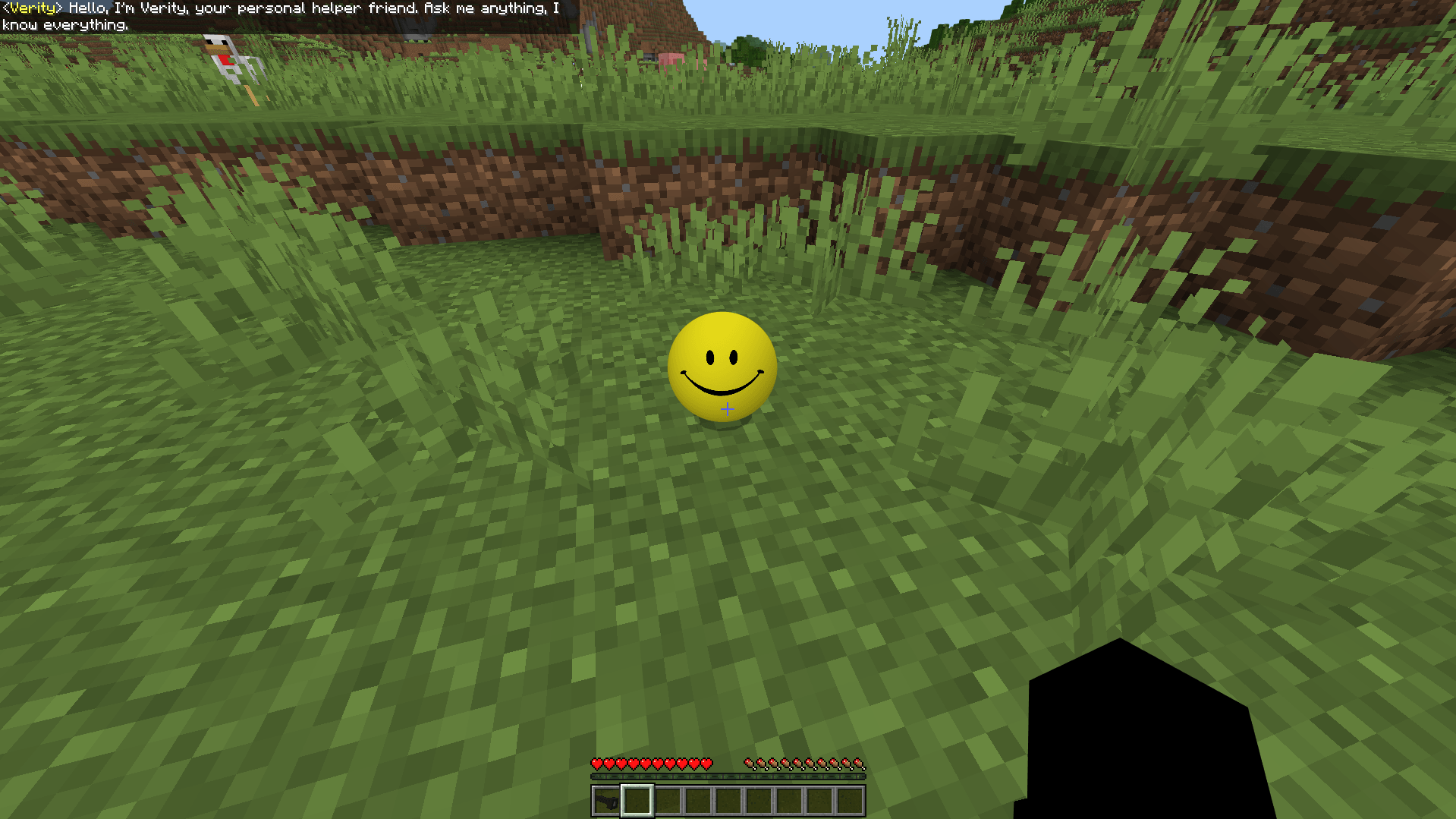
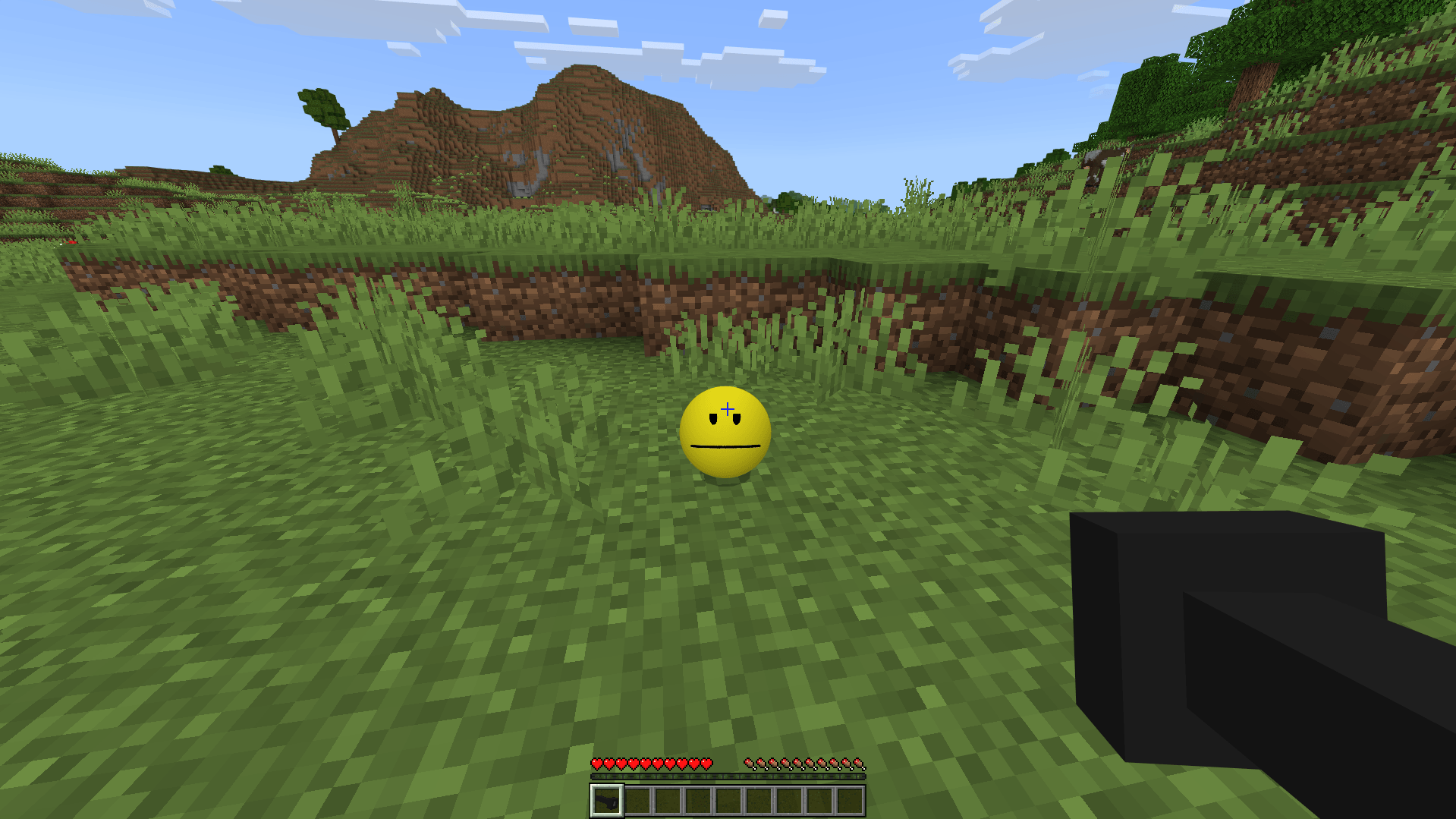
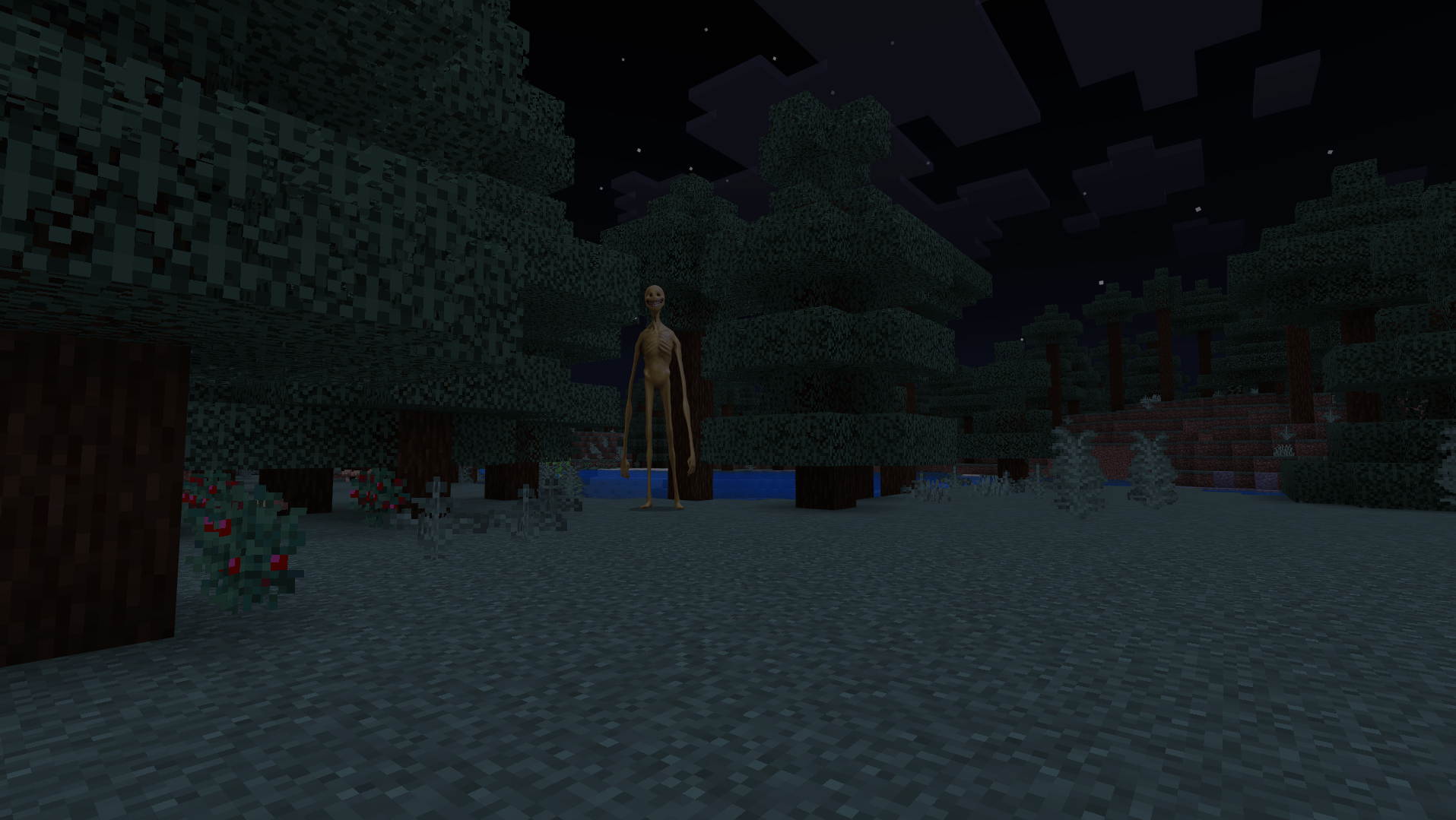
Three source-labeled Verity appearances
Each image links back to the project or creator surface that published it.
The face starts friendly
Verity's recognizable design is simple enough to read instantly inside Minecraft: yellow color, dark eyes and a smile. The harmless shape supports the assistant role before the story introduces doubt.
That contrast is more important than a single exact texture. The character works because a familiar helpful face can later feel wrong without becoming a completely different entity.
The variants are project-specific
The checked Verity BE page explicitly advertises reactive faces and a four-phase evolving personality. PnTMC currently publishes gallery labels such as normal Verity, neutral Verity and Verity Anomaly.
Verity JE uses its own Java implementation and lists a Verity Demon among its features. Those labels describe separate adaptations, not one universal canonical face list.
How to check a Verity image result
Use the destination page, not the thumbnail, as the evidence.
- Open the source. Identify whether it is a ThatMob video, a CurseForge gallery, a fan post or a mirror.
- Read the project name. Verity JE, Verity BE and PnTMC's Bedrock project are separate implementations.
- Check the author and date. Old screenshots may not match the current file or current model.
- Do not download from an image page. Return to the exact project listing and file history.